BLUE SIDE presents a selection of wineries for sale in the southern Rhône Valley—from Châteauneuf-du-Pape to the Côtes du Rhône Villages and the Costières—and assists buyers and sellers from the search phase through the sale and takeover of the business.

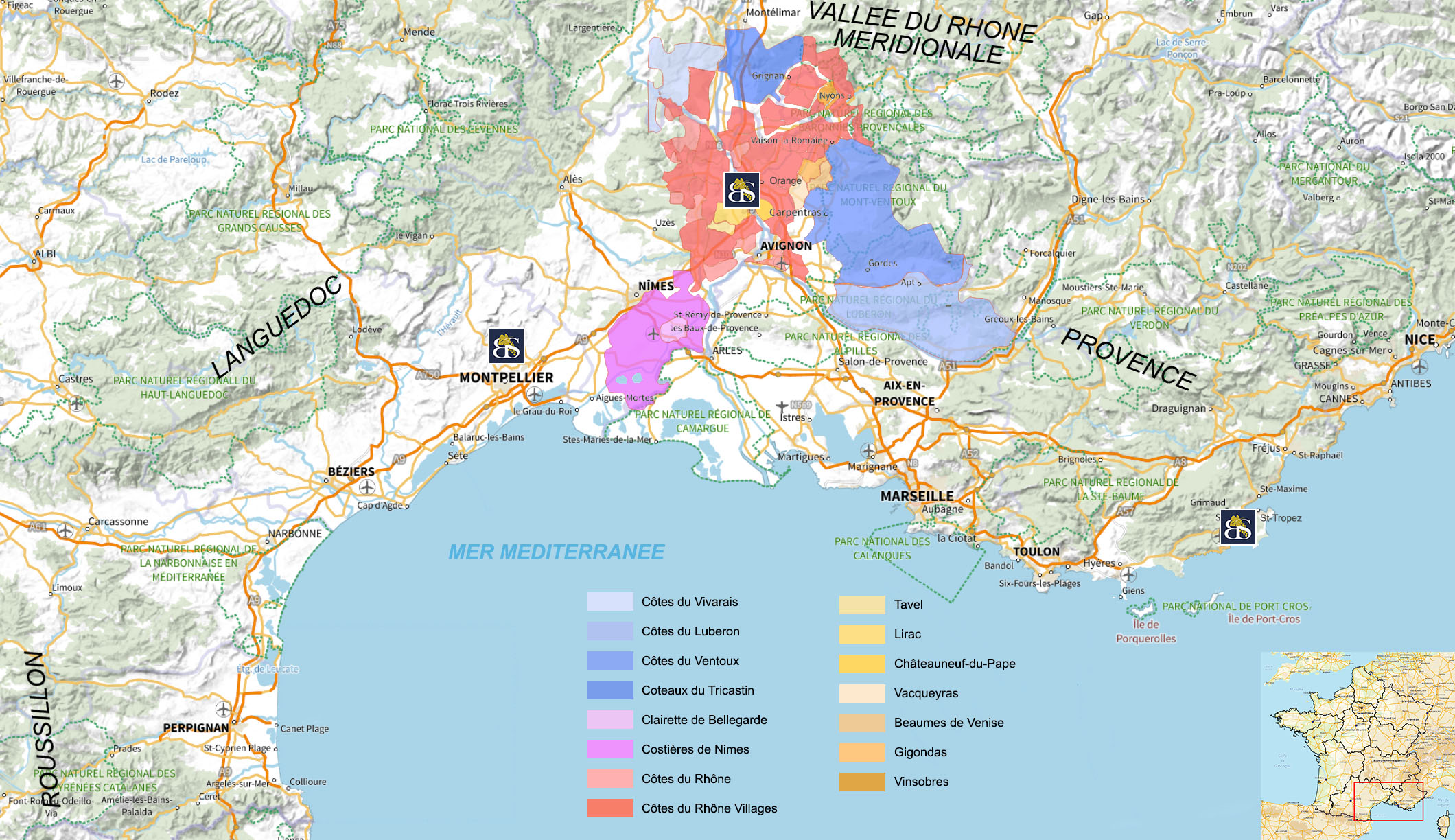
The vineyards of the southern Rhone Valley stretch from Montélimar to Avignon in the Drôme, Ardèche, Vaucluse and Gard departments.
It is planted on both sides of the Rhône river from Donzère to the mouth of the Durance, on hillsides and plateaus at various altitudes.
The AOCs of the Rhône Valley cover approximately 60,200 hectares. The 2025 harvest totaled approximately 2 million hectoliters, comprising 73 % of red wine, 14 % of rosé, and 13 % of white wine. It is France’s second-largest AOC wine region, both in terms of volume and area.
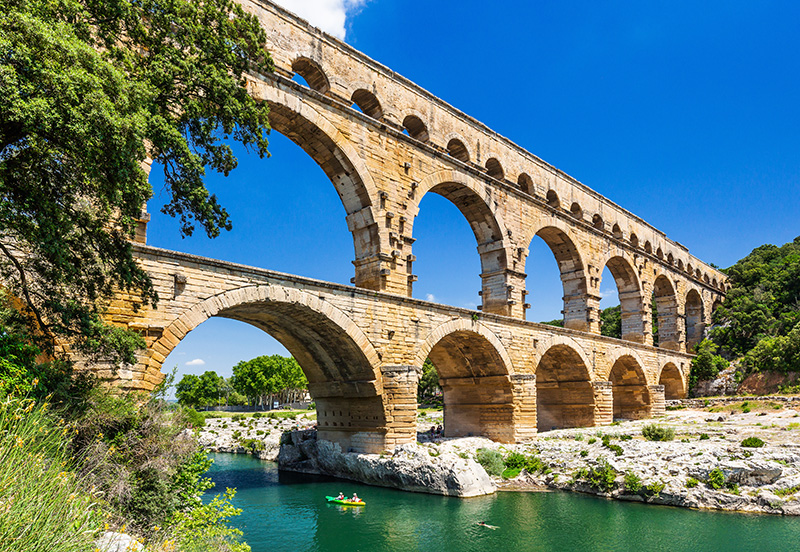
From Montélimar to the south of Avignon, and around the city of Orange, the vineyards of the southern Rhône Valley are located in the departments of Drôme (26), Ardèche (07), Vaucluse (84), and Gard (30). This wine-growing region is bounded by the mountain ranges that surround it: the Ardèche Plateau with its garrigue scrubland to the west, the subalpine ranges of the Baronnies and Ventoux to the east, the Alpilles mountain range to the south, and the Luberon to the southeast, which forms the boundary with the Provençal wine region.
The typically Mediterranean climate in this wine-growing region is very dry and strongly influenced by the Mistral wind, which favors organic and biodynamic farming. The proximity of mountain ranges such as Mont Ventoux, the Dentelles de Montmirail, and the Luberon tempers this climate by providing the vineyards with additional moisture.
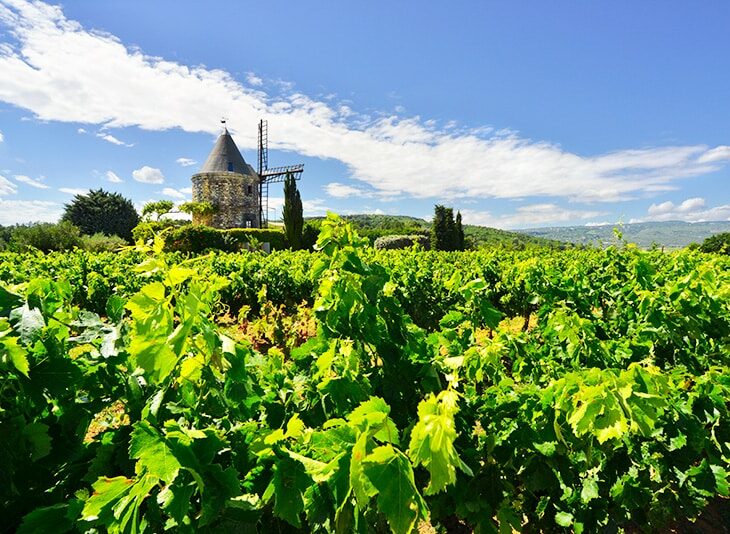
The terroirs of the Southern Rhône Valley are complex. The vines planted on hillsides or on plateaus blossom on three types of dominant soils: the first is clay-limestone, the second is made up of pebbles rolled by the Rhone (emblematic of the Châteauneuf-du-Pape AOC) and the third is made up of sandy slopes.
The main grape varieties used by the winegrowers are Grenache, Syrah, Mourvèdre, Cinsault, Carignan, Roussanne, Marsanne, Bourboulenc, Clairette and Viognier. These grape varieties are complemented, according to each appellation, by many other grape varieties.
The most famous appellation in this wine region is without question the AOC Châteauneuf-du-Pape. Each AOC or AOP presents elegant and fine wines with a strong character, such as Côtes du Rhône, Beaumes-de-Venise, Clairette-de-Bellegarde, Costières-de-Nîmes in the Gard, Coteaux du Tricastin, the wide range of Côtes-du-Rhône-Villages, Côtes-du-Vivarais, Gigondas, Grignan-les-Adhémar, Lirac, Côtes du Luberon, Muscat-de-Beaumes-de-Venise, Rasteau, Rasteau Rancio, Tavel, Vacqueyras, Côtes du Ventoux and Vinsobres. Of the 95 communes that make up the Côtes-du-Rhône-Villages appellation, 38 of them can add their name to the "villages" label, thus enhancing their terroirs and local know-how.
This renowned wine region with its multiple charms is also ideal for the development of wine tourism within the properties and wine estates.
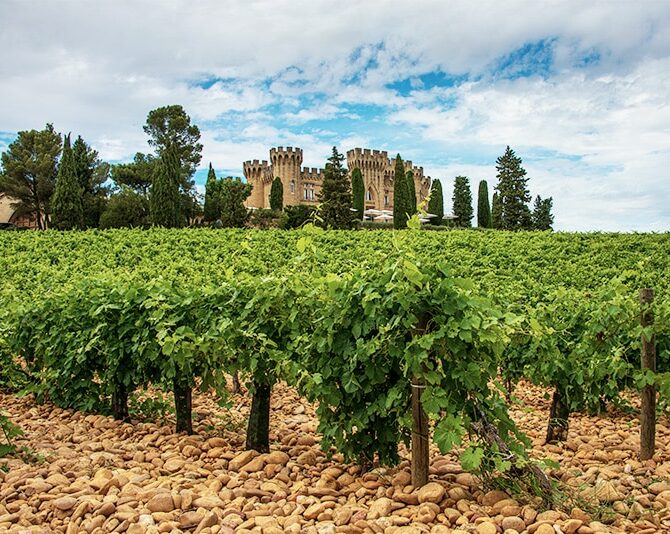
As in Provence or Languedoc, this Mediterranean vineyard was planted by the Greeks in the 5th century BC. Then developed in terraces by the Romans, the vines of the southern Rhone valley supplied the Roman Empire until its collapse.
Taken in hand by the abbeys and monasteries, the vineyards of the Rhone Valley then regained their splendor.
If the elaboration of wine has always been historically linked to the activities of the monks, the Rhone Valley has also had the imprint of the pope. From the 14th century, the popes installed in Avignon started the planting of the first pontifical vineyard and built the castle of Châteauneuf-du-Pape. They produced red and white wines and also planted Muscat grapes which spread to the Comtat Venaissin, today the territory of the Vaucluse and Drôme departments.
The Rhone Valley vineyard is now the second largest in France in terms of volume of AOC wine produced.
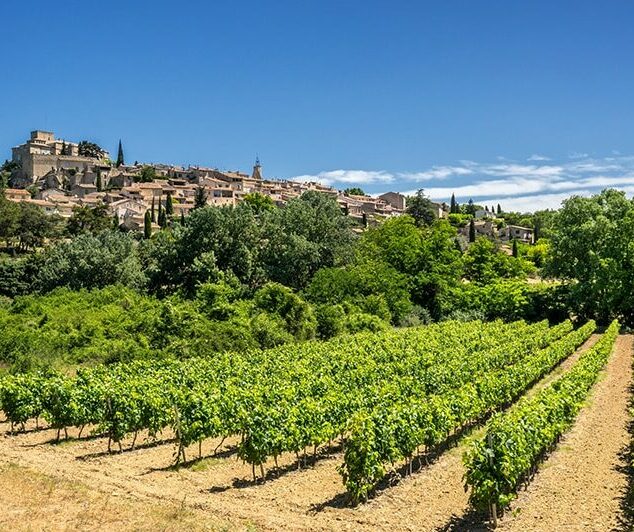
While the southern Rhône Valley accounts for the bulk of the region’s wine production, the northern Rhône Valley is nonetheless renowned for its appellations, vineyards, and prestigious wines, which are celebrated far beyond France’s borders.
Along the Rhone River from Vienne to Valence on about 4,700 hectares, the vineyards of the northern Rhone Valley extend over a wide variety of terroirs on steep hillsides structured in terraces. The climate is both more temperate and wetter than in the south.
A single grape variety used for red wine: Syrah. For white wine: Marsanne, Roussanne, and, of course, Viognier, which, when vinified as a single-varietal wine, gives body to Condrieu—which, in our opinion, remains one of the most fabulous white wines in the world.
The eight renowned appellations that make up the northern Rhône Valley are the AOC Côte-Rôtie, the AOC Hermitage, the AOC Crozes-Hermitage, the AOC Condrieu (white wine only), AOC Saint-Joseph, AOC Château-Grillet, AOC Saint-Péray, and AOC Cornas.
Here are a few notable features of these appellations: Château-Grillet is produced exclusively on the 4 hectares of vineyards belonging to the estate of the same name. Condrieu produces only white wines made exclusively from the Viognier grape variety.
The red wines are powerful, smooth and elegant and often have good ageing potential. The white wines, including the white of Condrieu, have an extraordinary aromatic diversity combining minerality and freshness, from violet to honey, apricot and peach.
Selling a wine estate, vineyard, or winery in the AOC regions of Côtes du Rhône, Châteauneuf-du-Pape, Rasteau, Tavel, Vacqueyras, Gigondas, Lirac, or even in the Luberon, begins with establishing a relationship of trust between BLUE SIDE and the seller so that we can present the buyer with a detailed and reliable wine-growing plan that, beyond the sale price, will form the basis of a transaction that is satisfactory to both parties.
Prices for vineyards in the Côtes du Rhône vary widely. Depending on the appellation and terroir, they can range from 20,000 euros to over one million euros per hectare of vineyard.
Since there are numerous AOC designations in this wine-growing region, each with a strong identity—both in terms of its wines and their marketing—investors or prospective winemakers should first focus on the specific characteristics of their target vineyard: which AOC or AOP, the merits of IGPs, the specific regulations, the winemaking and vineyard management tools, whether to produce red, white, or rosé wine, organic or conventional viticulture, the marketing channels, and the priority investments: in the winery or in the vineyard, …
Then, taking into account the wine tourism appeal of the region, BLUE SIDE will evaluate the potential of the property for the buyer, first by its geographical location, then by the presence of buildings of character, a castle, a farmhouse, a bastide, possibly exploitable in guest rooms, hotels or receptions (stays, weddings, seminars, receptions, ...) or oenotouristic activities (visit of the cellar, visit of the vineyard, wine tasting, initiation to oenology, ...).
BLUE SIDE's mission is to make projections and to accompany its clients' projects, in addition to its technical expertise in the wine industry and its knowledge of the specificities of wine estate transactions.